
Research Paper: The Picture of Dorian Gray
- R. A. Fletcher
- Dec 20, 2025
- 14 min read

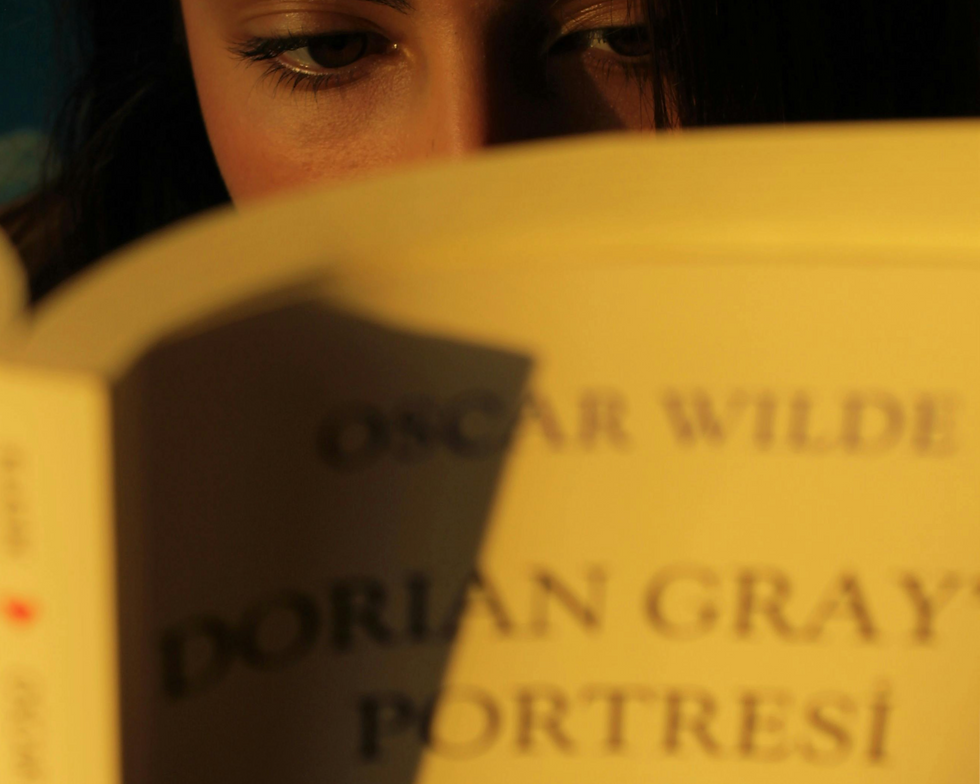
Oscar Wilde’s The Picture of Dorian Gray is a stunning example of intellectual Gothic literature expressed in a work of fiction. The novel has been the topic of controversy, moral debate, and artistic analysis for more than 100 years. Below, I will explore how critics have analyzed the novel over the past 50 years, the evolution of the novel’s literary analysis, and my own personal experience reading the book through a critical lens.
The Crucible - Philip K. Cohen 1978
Philip K Cohen’s article “The Crucible” examines the moral implications of the novel “The Picture of Dorian Grey.” This analysis presents a critical overview of the broader themes of the novel from a biblical worldview. He begins by defining the novel as “unambiguously, rigorously moral.” He neatly defines the entire theme of the novel in one sentence: “Heaven and hell, pride and repentance, Christ and the devil--Wilde situates Dorian between these moral extremes and calls upon him to decide his fate.” He examines the structure of the novel and the events and themes at each point, with the murder of Basil Hallward as the central point that splits the novel into two symmetrical halves. Cohen examines this scene at length, discussing the points Basil makes about repentance and how he had worshiped evil by worshiping Dorian’s beauty.
The analysis continues with a review of the symbolism of the Bible seen in the structure of the novel. Cohen claims that the moral symmetry of the book represents the opposition between the Old and New Testaments and that the death of Basil was Dorian confronting his anger with God. He likens Basil to Dorian’s good angel and later, James Vane, as a secondary manifestation of moral order. He concludes the analysis with a review of the emotional rollercoaster Dorian experienced each time he silenced his guilt with the death of those who reminded him of his moral follies, only to fall victim to his own guilt (Cohen).
He Resisted Everything Except Temptation - Steven Marcus 1985
Steven Marcus’ article “He Resisted Everything Except Temptation” is a biographical analysis of the works of Oscar Wilde, including the novel The Picture of Dorian Grey. It presents another perspective on the life of Oscar Wilde and the influences that shaped his written works. Marcus begins by examining the life of Oscar Wilde in terms of literary progress and recognition. He examines the author’s life and success as a writer up until the publication of The Picture of Dorian Gray, which led to scandalous attention due to his real-life homosexual affair, which many claim is reflected in the novel. This leads to an examination of the reception the book received as an “immoral book” and Wilde’s desire to have it be seen instead as a work of art.
The analysis continues to follow the life of Oscar Wilde through his continued success and ultimate ruin. While it discusses the realities of Wilde’s life, it positions the novel as a turning point in his life that portrays the author's actual experiences. Marcus draws parallels between real people and events in Wilde’s life that are reflected in the characters and events of the novel. He concludes with a statement from Wilde that he “had put only his talent into his work, but had put his genius into his life,” which directly reflects the comments and themes portrayed in the novel (Marcus).
The Picture of Dorian Gray: Overview - David A. Upchurch 1991
David A. Upchurch’s article “The Picture of Dorian Gray: Overview” explores how other literary critics have categorized the novel “as an autobiography of Wilde's life, as gothic melodrama, and as an aesthetic novel.” It also analyzes the themes of the novel and the relationship between ethics and aesthetics. Upchurch begins by discussing the controversial nature of the novel and how the conflicting views of ethics and aesthetics prompted critics to approach the analysis of the novel from a variety of positions. He goes on to examine the novel in relation to Oscar Wilde’s outspoken views and the critiques from other authors at the time. He then examines how the novel adeptly portrays the idea that art is detached from reality while also being directly involved with it. The ultimate conclusion is that the novel “breathed new life into the legends by infusing them with the doctrines of the Aesthetic Movement” (Upchurch).
Ethics and Aesthetics in The Picture of Dorian Gray - Michael Patrick Gillespie 1994
Michael Patrick Gillespie’s article “Ethics and Aesthetics in The Picture of Dorian Gray” analyzes “the relationship between aesthetics and ethics in The Picture of Dorian Gray, arguing that Wilde's novel "gains aesthetic force from the possibility of diverse interpretations offered by narrative's responsiveness to a range of alternative ethical systems.” He begins by aligning a quote from Socrates’ that “the unexamined life is not worth living” to the overall narrative design of the novel. However, he continues to state that before an analysis from this point of view can be adequately undertaken, several questions must first be answered regarding the system of ethics present in the novel. He goes on to explain that most responses to the novel have been focused on single-minded, moralistic interpretations. He claims that a more complete approach would take into account both the reader's reaction and the author’s intentions to create a bigger picture of the range of possible interpretations.
Gillespie dives into the duality of his analysis, expressing both an interest in addressing inherent ethical assumptions and individual interpretations of personal morals and artistic value. He spends a great deal of time discussing the paradoxical implications of this type of analysis, particularly relating to ethics. He then draws parallels between various views of ethics and social behavior and Oscar Wilde’s view of ethics and art expressed in the novel. From here, the analysis focuses on how Wilde presents a “critical redefinition of the relationship of art and morality.” He cautions critics to avoid the easy interpretations of the novel and emphasises the complexity of the literary world at the time of the writing.
Finally, Gillespie dives into an analysis of the actual events of the book. He explores the relationship between Dorian Gray and Lord Henry and the ideals and paradoxes they discuss throughout the book. He explores the differences between how each of the men in the story relates to these ideals and how these interpretations shape their lives and personalities. He concludes by stating that the novel allows the reader to examine their own ethical views due to the range of alternative ethical responses conveyed in relation to actual behaviour (Gillespie).
Wilde's The Picture of Dorian Gray and Lady Windermere's Fan - Christopher S. Nassaar 1995
Christopher S. Nassaar’s article “Wilde’s The Picture of Dorian Gray and Lady Windermere’s Fan” is a comparative analysis that views “the four male characters in Lady Windermere's Fan as versions of the protagonist of The Picture of Dorian Gray.” The analysis begins by providing an overview of the evolution of Dorian Gray from childlike innocence to serious depravity. Nassaar divides the evolution into four key stages. First, an innocent man who has not yet come into contact with evil. Second, his relationship with Sibyl Vane an his first contact with evil while remaining, for the most part, innocent. Third, a period of limited corruption where he has both good and evil influences and maintains a sense of morality. Finally, the loss of control when he murders Basil.
These key instances and portrayals are what the rest of the analysis is based on. Nassaar likens each stage of Dorian’s life to characters in Oscar Wilde’s other work, Lady Windermere’s Fan. He claims that Lord Windermere is stage one, Lady Windermere is stage two, Lord Darlington is stage three, and Mrs. Erlynne is stage four. He concludes by stating, “Treatment, then, or form, is what is vital in all art, not subject matter” (Nassaar).
Critical Essay on ‘The Picture of Dorian Gray - Brian Aubrey 2005
Bryan Aubrey’s article “Critical Essay on ‘The Picture of Dorian Gray’” analyzes the characters in the novel and their relationship between “art and life, contemplation and action, beauty and ethics.” The unbiased literary analysis assesses how Oscar Wilde conveys the fact that art is independent from ethics by exploring the character development of the three main characters: Lord Henry, Basil Hallward, and Dorian Gray. The quote at the beginning of the article, “In his attempt, following Lord Henry's dictum, 'to cure the soul by means of the senses, and the senses by means of the soul,' Dorian succeeds only in satiating the one and corrupting the other” offers a succinct summary of the book's theme before the author dives into the characters.
Aubrey identifies Lord Henry as “a tired man who wants to live vicariously through a younger, more beautiful specimen.” He then goes on to explain the impact Lord Henry had on Dorian Gray, particularly relating to Dorian’s reaction to the death of Sibyl. He claims that taking action on desire is what separates art from ethics, which is why Lord Henry retreats from life to find pleasure in art. Aubrey comments that Lord Henry succeeds in detachment from the world while Dorian becomes more and more involved with the world, both of them making up each side of the paradox of Lord Henry’s philosophy.
Finally, Aubrey analyzes Basil Hallward in his own right, stating he is “the dichotomy between art and life, detachment and involvement.” Essentially, Aubrey is claiming that Basil was the perfect balance between the other two characters. However, as an artist, he should have maintained an artistic distance from his subjects so that his art was “unconscious, ideal, and remote.” Yet, he becomes infatuated with Dorian Gray, which leads him to not only put too much life into his art but also to encourage a young Dorian Gray to value his good looks above all else. The article concludes by saying that Basil's murder presents a metaphor for the Christian scheme of sin, repentance, and redemption. Aubrey also comments that while Dorian realizes his folly and seeks redemption for his soul, Lord Henry continues to believe that physical beauty conveys purity (Aubrey).
Aestheticism, Homoeroticism, and Christian Guilt in The Picture of Dorian Grey - Joseph Carroll 2005
Joseph Carroll’s article “Aestheticism, Homoeroticism, and Christian Guilt in The Picture of Dorian Grey” presents a “Darwinian critique of The Picture of Dorian Gray, focusing on the conflict in the novel between homoeroticism and Christian ethos.” He begins the essay with a bold statement that post-structuralism has suppressed both the idea that the author is an individual originator of literary meaning and the idea that “human nature” is a common frame of reference for literary depictions. Instead, Carroll favors a Darwinian approach that he believes provides a more well-rounded analytical point of view when criticizing literature. This lays the groundwork for his analysis of The Picture of Dorian Gray.
Caroll begins the analysis by stating that the novel presents challenges to Darwinian criticism, including homoerotic sexualization and central conflicts with two competing visions of human nature. He compares Christianity and Darwinism, concluding that while the novel does not follow Darwinian themes, it can still be used to understand the psychology of human nature, homoerotic variations, and ethical dimensions of religious belief. Caroll analyzes how others have studied homosexuality in the novel and notes that the most recent (at the time) studies focused only on the homosexual themes and avoided key concepts such as guilt and self-loathing. He posits that to truly be in a position to understand the symbolic structure of the novel, the concepts must be viewed in combination.
Carroll continues a deep analysis of the novel, starting with the three main characters, likening each to their sensual pleasures and moral pathos. He reflects on how different the novel is from Oscar Wilde’s other writings, concluding that Dorian Gray is a reflection of a part of Wilde’s personality. He examines literary concepts and homosexual perception at the time of the novel’s publication and draws parallels between the author and the character, citing events from both the book and the author’s life. He goes back and forth between the heterosexual storyline and the homosexual themes. Finally, the analysis turns to the overall morality of the novel. He concludes that there is no single moral message. Instead, the novel cautions against the practice of both excess and renunciation. The final conclusion comes in comparing the events of the novel and the character’s role to a Darwinian concept that “humans have an evolved moral sense that consists in empathic human bonds extending over time and generating a sense of personal responsibility. When that sense of human connection is violated, he explains, we feel guilt and remorse” (Carroll).
Wilde, Wagner, and the Aestheticist Debate of Representation: ‘What’s in a Name?’ The Importance of Being Earnest, or Lohengrin - Dieter Fuchs 2009
Dieter Fuchs’ article “Wilde Wagner, and the Aestheticist Debate of Representation: ‘What’s in a Name?’ The Importance of Being Earnest or Lohengrin” presents a comparative analysis that includes The Picture of Dorian Grey. The analysis presents the idea “that both The Picture of Dorian Gray and The Importance of Being Earnest are veiled rewrites of Richard Wagner’s 1850 opera Lohengrin.” He begins by positing that the works of Oscar Wilde as a whole are a presentation of German Music in the Victorian era due to the comic portrayal of literature and philosophy. He explains the similarities between Wilde’s writings and the ideas of the Arthurian myth of the Holy Grail and Plato’s Hellenistic idea of art.
Fuchs then compares the events in the novel to the events in Lohengrin, drawing parallels between Sibyl and Elsa. He also points out the reference that Wilde makes to Lohengrin in the novel and how the timing coincides with Sibyl Vane’s story. The analysis then turns to compare and contrast the methods of incorporating “musicalization of literature” in The Picture of Dorian Gray and The Importance of Being Earnest. The bulk of the analysis is then taken up by Fuchs comparing the importance of the secrets the characters from each of these works carry and how it impacts their relationships with women throughout each story. He continues to draw parallels between each of the stories, culminating in a deep analysis of Dorian’s perspective on art as a reflection of life.
Eventually, the analysis turns to examine the symbolism in the writing itself. Fuchs notes that Dorin’s name, even, symbolizes both light (Dorian) and dark (Gray). In addition, he examines the metaphors in the novel, such as the placement of the Picture in a dark room, representing his primal nature, similar to a caveman. The analysis concludes with the recognition that each story takes a different turn in the end; however, they all seem to conclude with the “unreliability of names and other markers of ‘truth’ and identity” (Fuchs).
Assessment of the Various Interpretations of The Picture of Dorian Gray
For several decades, The Picture of Dorian Gray has been analyzed from contrasting perspectives, including biographical analysis, critical analysis of the book's themes, comparative analysis, and religious analysis. In the late 20th century, the focus was generally on biographical analysis, diving into how the book was related to and influenced by Oscar Wilde’s life. However, at the turn of the century, there was a clear evolution of critics analyzing the themes of the story, particularly the relationship between art and ethics. Comparative analyses are also common closer to the turn of the century. As far as religious analysis goes, it is fair to say this has always been an element of how critics and readers alike view the novel.
Steven Marcus and David A. Upchurch both presented an autobiographical analysis of the novel, comparing the story to the true events in Oscar Wilde’s life. Both critiques analyze the same points and draw the same conclusion about Wilde’s life and writings. Several other analyses draw on aspects of Wilde’s life to support their claims and interpretations. Perhaps this is because the parallels are so easy to draw. There are events, individuals, and concepts in the novel that are directly reflected in Wilde’s life, and tangible evidence in his letters and writing to support these reflections.
Michael Patrick Gillespie and Brian Aubrey present a critical analysis of the book's themes and the relationship between art and ethics. It could be said that these articles utilize the most obvious method of analysis since Oscar Wilde spelled out the comparison in the introduction to the book and several times throughout. It is not difficult to find the direct references or the symbolism of these concepts stuffed into the narrative work. Yet Gillespie incorporates a deeper concept of analysis into his paper that is not present in Aubrey’s work. He includes the autobiographical viewpoint and cautions critics about drawing “easy” conclusions for literary works like The Picture of Dorian Gray.
Dieter Fuchs and Christopher S. Nassaar have entirely different approaches to the analysis. Instead of focusing solely on the story itself, they choose other works to compare it to in order to illustrate even deeper meaning and artistic value. While Nassaar draws parallels between Dorian Gray’s experiences and another work by Wilde that expands on key concepts present in much of his work, Fuchs compares it to works of other artists. Both comparisons convey the artistic and intellectual value of the novel.
Finally, Philip K. Cohen and Joseph Carroll both analyze the novel from a religious perspective. However, the viewpoints are wildly different. Cohen focuses entirely on the moral themes and their religious roots. Carroll, on the other hand, heavily emphasizes the homosexual themes that are hinted at in the book and apparent in Wilde’s personal life. This analysis interestingly coincides with a time when homosexuality was at the forefront of political and moral debate.
Novel Assessment: The Picture of Dorian Gray
As I read through the novel, pondering the different methods of critical analysis that I could employ, I found that I can not personally exclude any specific critical approach. Although I didn’t initially know the details of Oscar Wilde’s life and the direct relationship the characters and events had with his own personal experiences, I could tell that there was something of himself emanating from the story. From the very beginning, he expresses the idea that art is independent from ethics. Not only does this revelation– presented to the reader before even meeting the characters– provide a foundation for the themes and relationships expressed in the story, but it also tells the reader a great deal about the author.
I didn’t go searching for details of Oscar Wilde’s life to confirm the impression I had of the author. I simply felt as though he had worked thoughts and emotions so skillfully into the novel that his personal experience with the philosophies and events of the novel was more than apparent throughout. Upon further analysis of autobiographical critiques, it seems that these impressions were spot on.
As I continued reading, considering the meaning behind the main themes of the story, the religious undertones were quickly revealed as well. The author’s artistic ability is emphasized even further by his ability to maintain the themes of good and evil, repentance and damnation, sin and guilt, and heaven and hell all through the lens of intellectual paradoxes. It just goes to show that narrowing an analysis to one singular interpretation will rob a reader of a fully indulgent experience. If viewed as a simple allegorical autobiography or a religious metaphor, one could miss the finer nuances of moral implications, self-struggle, and more. It is only when the book is viewed from every side that it can be fully understood.
Outside of these “easy” interpretations of the novel, I also found myself hanging on every word to find interesting artistic details that I wanted to explore further. One particular question that I found myself asking over and over again is why Wilde referred to the characters by their names in a particular manner. For example, Basil Hallward was constantly referred to in different ways. Sometimes it was his full name, other times it was only his first or last. Yet, Dorian Gray was almost always referred to by his full name unless a character was addressing him in informal dialogue. Then there was Lord Henry, who was almost always referred to simply as “Henry”. This made me consider how much of the artistic value from the novel, particularly in terms of structure and form, was intentional, and how much was the unintentional magnificent masterpiece of a talented mind expressing his feelings in a work of fiction.
Works Cited
[1] Aubrey, Bryan. "Critical Essay on 'The Picture of Dorian Gray'." Novels for Students, edited by Ira Mark Milne and Timothy Sisler, vol. 20, Gale, 2005. Gale Literature Resource Center, link.gale.com/apps/doc/H1420060099/GLS?u=vic_liberty&sid=bookmark-GLS&xid=e7fb26f0. Accessed 15 June 2025.
[2] Carroll, Joseph. "Aestheticism, Homoeroticism, and Christian Guilt in The Picture of Dorian Gray." Twentieth-Century Literary Criticism, edited by Kathy D. Darrow, vol. 272, Gale, 2012. Gale Literature Resource Center, link.gale.com/apps/doc/H1420110026/GLS?u=vic_liberty&sid=bookmark-GLS&xid=4405b70e. Accessed 15 June 2025. Originally published in Philosophy and Literature, vol. 29, no. 2, Oct. 2005, pp. 286-304.
[3] Cohen, Philip K. "The Crucible." Novels for Students, edited by Ira Mark Milne and Timothy Sisler, vol. 20, Gale, 2005. Gale Literature Resource Center, link.gale.com/apps/doc/H1420060100/GLS?u=vic_liberty&sid=bookmark-GLS&xid=ff7a88d6. Accessed 15 June 2025. Originally published in The Moral Vision of Oscar Wilde, Fairleigh Dickinson University Press, 1978, pp. 123-127.
[4] Fuchs, Dieter. "Wilde, Wagner, and the Aestheticist Debate of Representation: ‘What’s in a Name?’ The Importance of Being Earnest, or Lohengrin." Twentieth-Century Literary Criticism, edited by Lawrence J. Trudeau, vol. 349, Gale, 2018. Gale Literature Resource Center, link.gale.com/apps/doc/H1420123789/GLS?u=vic_liberty&sid=bookmark-GLS&xid=a324b1a0. Accessed 15 June 2025. Originally published in Anglistik, vol. 20, no. 2, 2009, pp. 131-143.
[5] Gillespie, Michael Patrick. "Ethics and Aesthetics in The Picture of Dorian Gray." Twentieth-Century Literary Criticism, edited by Kathy D. Darrow, vol. 272, Gale, 2012. Gale Literature Resource Center, link.gale.com/apps/doc/H1420110025/GLS?u=vic_liberty&sid=bookmark-GLS&xid=9e8be9f8. Accessed 15 June 2025. Originally published in Rediscovering Oscar Wilde, edited by C. George Sandulescu, Colin Smythe, 1994, pp. 137-155.
[6] Marcus, Steven. "He Resisted Everything Except Temptation." Literature Resource Center, Gale, 2023. Gale Literature Resource Center, link.gale.com/apps/doc/H1420008641/GLS?u=vic_liberty&sid=bookmark-GLS&xid=3799a77f. Accessed 15 June 2025. Originally published in The New York Times Book Review, 17 Nov. 1985, p. 7.
[7] Nassaar, Christopher S. "Wilde's The Picture of Dorian Gray and Lady Windermere's Fan." Drama Criticism, edited by Scott T. Darga, vol. 17, Gale, 2002. Gale Literature Resource Center, link.gale.com/apps/doc/H1420043342/GLS?u=vic_liberty&sid=bookmark-GLS&xid=05f1e5fd. Accessed 15 June 2025. Originally published in Explicator, vol. 54, no. 1, Fall 1995, pp. 20-24.
[8] Upchurch, David A. "The Picture of Dorian Gray: Overview." Reference Guide to English Literature, edited by D. L. Kirkpatrick, 2nd ed., St. James Press, 1991. Gale Literature Resource Center, link.gale.com/apps/doc/H1420008643/GLS?u=vic_liberty&sid=bookmark-GLS&xid=b84ff9f3. Accessed 15 June 2025.


Comments